Weather and what to wear in Franz Josef
Franz Josef is the wettest of the West Coast stations in NIWA’s tables, and the weather turns quickly between the coast and the ice. Pack a proper rain jacket, warm layers and insect repellent, and expect the tours to supply most of the specialist gear.
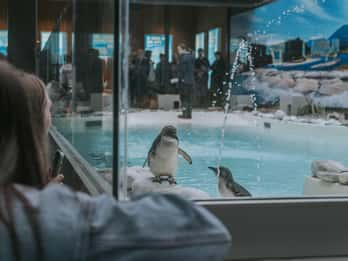
West Coast Wildlife Centre entry
Entry ticket, valid 48 hours · 30 minutes to 2 hours
✓ Free cancellation
from NZ$ 69
Book on GetYourGuide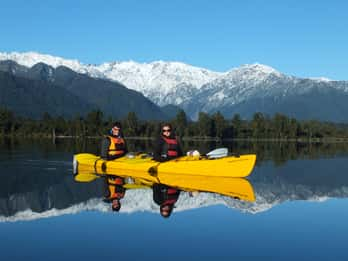
Lake Mapourika kayak into a rainforest creek
Double kayak, guided · 3 hours
✓ Free cancellation
from NZ$ 149
Book on GetYourGuide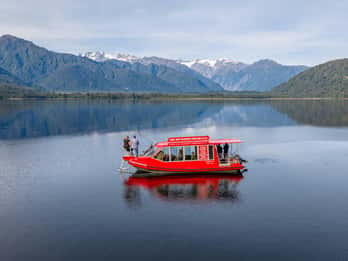
Lake Mapourika cruise on the Hanna-K
Covered boat, small group · 2 hours
✓ Free cancellation
from NZ$ 125
Book on GetYourGuide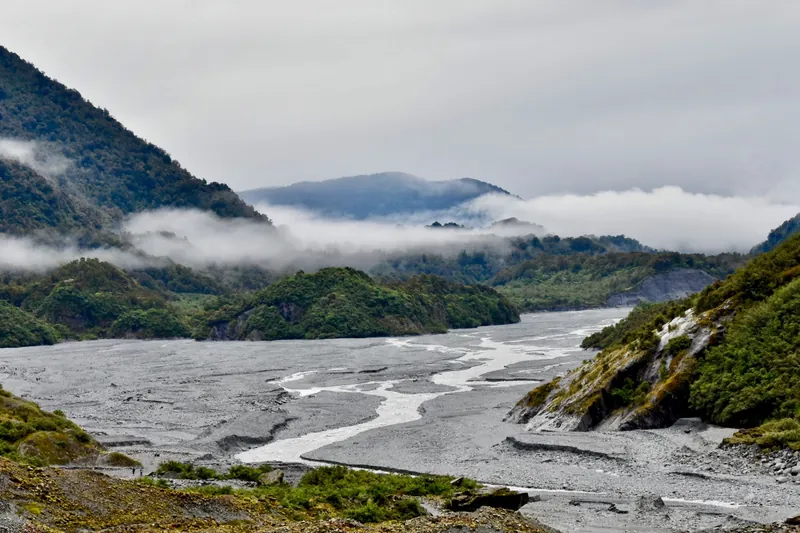
NIWA’s normals for 1981 to 2010 give Franz Josef 5,751 mm of rain a year, the highest of the four West Coast stations in its tables and more than twice the total at Hokitika. Even July, the driest month, has 14 rain days, and October has 21. DOC tells visitors to carry warm and waterproof clothing at all times and to dress for changeable weather in sturdy footwear. That is the starting point for every packing list here.
Temperatures and wind
No temperature normals are published for Franz Josef itself, so the nearest coastal station is the best guide. Hokitika, 136 km north, averages a high of 19.9 °C and a low of 12.1 °C in February, its warmest month, and 12.0 °C and 3.1 °C in July. Air frost occurs there on three to five days a month from June to August. The glacier landing sites are much higher and colder than the coast, so bring a jacket and hat even in summer.
Average wind readings in the village are low. The mean wind speed recorded at Franz Josef is 7.8 km/h, but about 17 days a year bring gusts above 61 km/h, and the strongest gust in the record reached 109.3 km/h in July 2011. Sunshine figures exist only for the region: NIWA gives the coastal margins of the West Coast between 1,900 and 2,050 hours a year.
Clothes for the valley walks
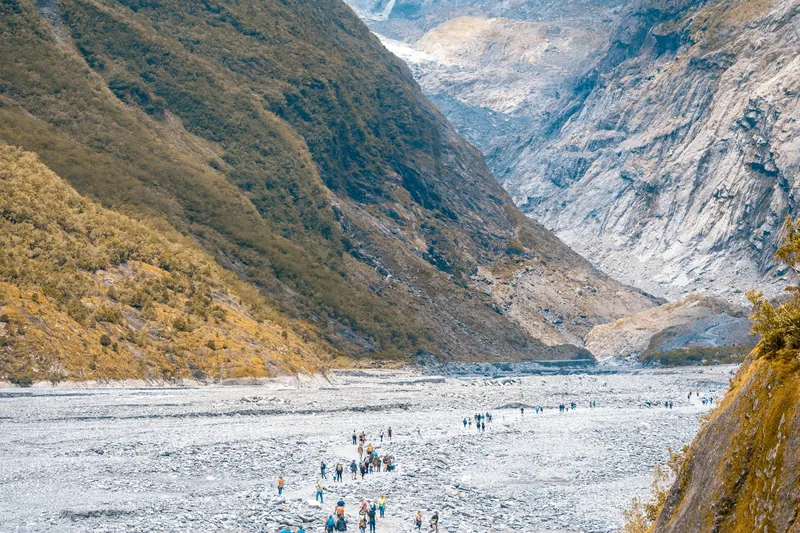
The short walks to the glacier viewpoints follow gravel and forest tracks, and DOC asks for sturdy footwear on them. DOC’s Land Safety Code asks you to check the forecast because the weather can change fast, to carry extra clothing and food, and to tell someone your plans on longer walks. The DOC visitor centre on Cron Street has the daily forecast and lends personal locator beacons for longer trips. In the glacier valleys rain has another effect: DOC warns that downpours can flood the riverbed within minutes, so stay on the marked track and behind the barriers, and never try to cross the Waiho or Callery rivers on foot.
Guided walks bring much of the kit. The Franz Josef valley walk includes rain gear, umbrellas, walking poles and boots if you need them, plus sunscreen and sandfly repellent.
On the ice and in the air
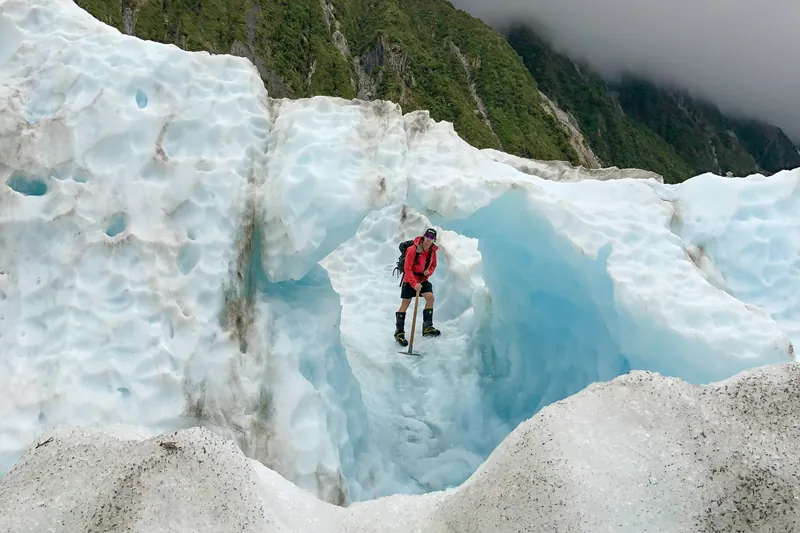
For a heli-hike on the Franz Josef Glacier the operator provides boots, crampons, poles, waterproof jackets and trousers, helmets and gloves. It asks you to bring warm clothing, sunglasses, sunscreen, long trousers and a water bottle. On the Fox Glacier heli-hike, leather boots and socks, crampons and wet-weather jackets and overtrousers are included, and jeans are not allowed. Scenic flights stop for about ten minutes at a landing site, usually on snow, so wear shoes with a sole that grips.
Sunglasses matter more than the grey skies suggest. SunSmart rates UV as damaging from September to April between 10 am and 4 pm, and on snow, ice and water in every month.
On the water
Kayaking on Lake Mapourika is an all-weather trip: the operator says it runs in the rain and hands out paddling jackets, dry bags and wet-weather jackets and trousers when needed, along with sunscreen and insect repellent. Food is not included, so bring a snack and water. The two-hour cruise uses a boat with a closed cabin and a covered deck, and you may bring your own food and drinks.
Sandflies
DOC calls sandflies common in the park, and the advice for Ōkārito is the same: bring insect repellent. Te Ara, the government encyclopaedia, notes that DEET is the most effective repellent, that children should use products with less than 10 per cent DEET and that sandflies tend not to bite moving targets. They are not found above the tree line.
When the rain does not stop
On a day when nothing flies, the West Coast Wildlife Centre in the village is indoors and suits a visit of 30 minutes to two hours, with penguin feeding at 11 am and 3 pm. The ticket is valid for 48 hours, so you can return. Reviews mention that the kiwi room is small and dark. Glacier Hot Pools on Cron Street, a directory listing says, have three main pools and three private ones between 36 and 40 degrees, open in all seasons. The page on the best time to visit sets the rain figures against the daylight in each month.
All tours side by side
Outings that still work on a wet day: the indoor kiwi centre in the village, a kayak trip with rain gear handed out and a boat with a closed cabin on Lake Mapourika.
| Tour | Format | Duration | Age | Rating | From |
|---|---|---|---|---|---|
| Lake Mapourika cruise on the Hanna-KFranz Josef Wilderness ToursThe covered boat Hanna-K cruises towards the Okarito Kiwi Sanctuary while the skipper points out native birds such as the kōtuku (white heron), with tea or coffee on board. | Covered boat, small groupTransfer to the lake, tea and coffee, national park fees | 2 hoursOffice in Franz Josef | – | 4.7 (149 reviews) | From NZ$ 125Free cancellationBook on GetYourGuide |
| Lake Mapourika kayak into a rainforest creekFranz Josef Wilderness ToursA transfer from central Franz Josef takes you to Lake Mapourika, where you paddle a double sea kayak across the lake and into a creek inside the Okarito Kiwi Sanctuary. | Double kayak, guidedTransfer to the lake, guide, photos, jackets, dry bags, wet weather gear | 3 hoursCentral Franz Josef | – | 4.9 (141 reviews) | From NZ$ 149Free cancellationBook on GetYourGuide |
| West Coast Wildlife Centre entryWest Coast Wildlife CentreThe indoor centre in Franz Josef shows live kiwi in an open nocturnal room without glass, tuatara and ambassador penguins, and hatches rowi and Haast tokoeka chicks. | Entry ticket, valid 48 hoursKiwi house, penguins, tuatara, exhibition | 30 minutes to 2 hoursWest Coast Wildlife Centre, Franz Josef | – | 4.4 (53 reviews) | From NZ$ 69Free cancellationBook on GetYourGuide |
Prices and ratings come from the booking platform and are shown in New Zealand dollars per person. If you book through these links we earn a commission. Your price stays the same. Sorted by number of reviews.
Questions travellers ask
How cold is it in Franz Josef?
NIWA publishes no temperature normals for the village. Hokitika, on the coast 136 km north, averages highs of about 12 °C in July and 20 °C in February; on the ice and at the landing sites it is colder and windier.
What should I wear on a heli-hike?
The operators supply boots, crampons, waterproofs and more. Bring warm layers, sunglasses, sunscreen and long trousers; the Fox Glacier heli-hike does not allow jeans.
Do tours run in the rain?
Many do. The lake trips, guided walks and quad tours state that they run rain or shine and hand out wet-weather gear. Flights and heli-hikes need clear enough skies and are cancelled when cloud is low.
How bad are the sandflies?
DOC says they are common in the park, and Ōkārito is no exception. Use repellent and keep moving: sandflies tend not to bite moving targets, and they are absent above the tree line.
Do I need sunscreen on a rainy coast?
Yes. SunSmart rates UV as damaging from September to April between 10 am and 4 pm, and on snow, ice and water in every month.
Where these facts come from
Dates, opening hours and rules change. We checked these pages in November 2026; the official source has the final word.
- NIWA: The climate and weather of the West Coast (PDF)
- Figure.NZ (NIWA data): Mean minimum and maximum temperatures in Hokitika
- DOC: Westland Tai Poutini National Park
- DOC: Franz Josef Glacier
- DOC: Land Safety Code
- DOC: Ōkārito area
- Te Ara: Sandflies and mosquitoes
- SunSmart: UV radiation
- NZ Hot Pools: Glacier Hot Pools
- Tour pages on GetYourGuide, checked 2 November 2026